
Thinking about making a living as a graphic designer? We’ve been looking into the best freelance jobs in graphic design for 2026, and there are some solid options out there. Whether you’re just starting or looking to switch things up, knowing where the demand is can make a big difference. We’ve put together a list to help you figure out what skills to focus on and what clients are looking for. It’s a good time to be in this field if you’ve got the right talents.
When we think about graphic design jobs, logo design is probably the first thing that pops into our heads. And for good reason! It’s a big one. Businesses, big and small, always need a good logo. It’s like their face to the world, you know? A well-made logo can really make a company stand out. We’ve seen clients come to us with ideas that are all over the place, and our job is to take that and turn it into something clean and memorable.
It’s more than just a pretty picture; it’s the visual cornerstone of a brand. We spend a lot of time talking with clients to get a feel for what they’re about. What’s their vibe? Who are they trying to reach? Answering these questions helps us create something that actually works for them. We’ve found that the best logos are often simple but have a lot of thought behind them. Think about some of the most famous logos out there – they’re usually pretty straightforward, right?
Here’s a quick look at what goes into it:
We’ve noticed a trend where some companies are looking for designers who can work with cryptocurrency payments, which is pretty interesting. It opens up new avenues for finding work, like those remote positions you can search for. It’s a good idea to keep an eye on these opportunities if you’re looking to expand your client base.
The process can sometimes feel like a puzzle. You’re trying to fit shapes, colors, and meanings together so they make sense for the business. It takes patience and a good eye for detail. We’ve learned that revisions are part of the game, and handling them professionally is key to a happy client.
We’ve seen some really cool projects come through, from startups needing their very first mark to established companies wanting a refresh. It’s a constant challenge, but seeing a logo we designed out in the wild is always a great feeling. If you’re looking to get into this, building a strong portfolio is the way to go. Check out what a creative logo designer needs to do here.
When a client needs more than just a logo, we talk about branding packages. This is where we really help a business find its look and feel. It’s not just about one thing; it’s about creating a whole identity that sticks with people. We put together a set of guidelines and assets so everything the business puts out looks consistent.
Think about it: a business needs a logo, sure, but they also need color palettes, fonts, maybe some specific imagery styles, and rules on how to use it all. A good branding package covers these bases. It’s like giving a business a uniform that everyone recognizes.
We usually start by talking with the client about their goals and who they want to reach. Then we figure out the visual stuff. This often includes:
Putting together a solid branding package is a big deal for any company trying to make a mark. It helps them look professional and trustworthy right from the start. It’s a lot more involved than just a single logo, but the impact is way bigger. We’ve seen clients really take off once they have a clear, consistent brand identity. It makes marketing so much easier for them too, because they aren’t guessing what to do each time. It’s a smart investment for businesses looking to grow. We often help startups get this sorted, and it’s amazing to see how it transforms their presence. Finding the right design partner can make all the difference here.
We see social media graphics everywhere, right? They’re the eye-catching images and videos that pop up in our feeds. For us designers, this is a huge area. Businesses, big and small, really need good visuals to stand out online. It’s not just about making something pretty; it’s about creating graphics that grab attention and get people to stop scrolling.
Creating effective social media graphics involves more than just slapping a logo on a photo. We have to think about the platform, the audience, and the message. What works on Instagram might not work on LinkedIn. We also need to consider things like aspect ratios and file types. It’s a constant learning process, but it’s also pretty rewarding when you see your work getting shared.
Here’s a quick look at what goes into it:
We’ve found that clients are often looking for packages that cover a range of needs, from single posts to full campaign assets. This is why having a solid portfolio showcasing social media design is so important. It shows potential clients we know what we’re doing. We’ve seen a lot of demand for these kinds of jobs, with many remote positions available, often paying well per hour.
It’s easy to think of social media graphics as simple, but there’s a lot of strategy behind a good design. We’re not just decorating; we’re communicating visually to achieve specific marketing goals. This means understanding trends, but also staying true to the brand’s core message.
If you’re looking to get into this, practicing different styles and formats is key. Think about creating mock posts for imaginary brands or redesigning existing ones to see how you can improve them. There are tons of freelance opportunities out there for designers who can consistently produce engaging content.
Okay, so we’re talking about website banners. These are the big images you see right at the top of a webpage, often called hero images. They’re the first thing people see, so they really need to make a good impression. We’ve found that getting these right can make a big difference in how long someone sticks around on a site.
Think about it: you land on a page, and BAM! A great banner grabs your attention. It tells you what the site is about or shows off a key product. If it’s boring or doesn’t make sense, you might just bounce. A well-designed banner is like a digital handshake. It sets the tone and can guide the visitor’s eye.
We often see clients needing banners for specific campaigns or to highlight new services. It’s not just about making something pretty; it’s about making something that works. This means considering the call to action – what do we want people to do after seeing the banner? Click a button? Read more? Sign up?
Here’s a quick rundown of what goes into a good banner project:
Sometimes, clients have specific ideas about dimensions, like needing an 85cm x 205cm stand-up banner for an event [3543]. Other times, it’s more about creating a general hero image that fits their overall look and feel, aiming to boost engagement [b990]. It really varies from project to project.
We’ve noticed that clients who invest in good banner design often see better results. It’s a small part of a website, but it has a big impact on first impressions and user behavior. Don’t skimp on this important visual element.
We’ve seen a big jump in clients needing infographics lately. It makes sense, right? People are busy, and a good infographic can explain complex stuff way faster than a wall of text. We’re talking about taking data, like survey results or market trends, and turning it into something visually interesting that people actually want to look at.
It’s all about making information digestible and shareable. Think about it: a client comes to us with a bunch of numbers and facts. Our job is to figure out the story those numbers tell and then present it clearly. This often means we need to do a bit of research ourselves to understand the topic, then plan out the flow of information. We usually start with a rough sketch, deciding where the charts go, what icons we’ll use, and how the text will fit in. It’s a bit like putting together a puzzle, but way more colorful.
Here’s a general idea of how we approach an infographic project:
We’ve done a lot of work for organizations that need to communicate important findings, like a humanitarian group needing to show their impact through data-driven visuals. It’s really satisfying when a design helps people grasp a topic they might otherwise ignore. We also see a lot of demand for product-focused infographics, especially for online listings where you need to grab attention fast like for Amazon products.
The key is balancing aesthetics with clarity. An infographic that looks pretty but is hard to read is a failure. We aim for that sweet spot where the design guides the viewer through the information logically and engagingly. It’s a skill that takes practice, but when it clicks, it’s incredibly effective.
We’ve found that clients often come back for more once they see how well infographics perform. They get shared on social media, embedded in blog posts, and used in presentations. It’s a really dynamic way to present information, and honestly, it’s one of our favorite types of projects because it feels like we’re genuinely helping people understand things better.
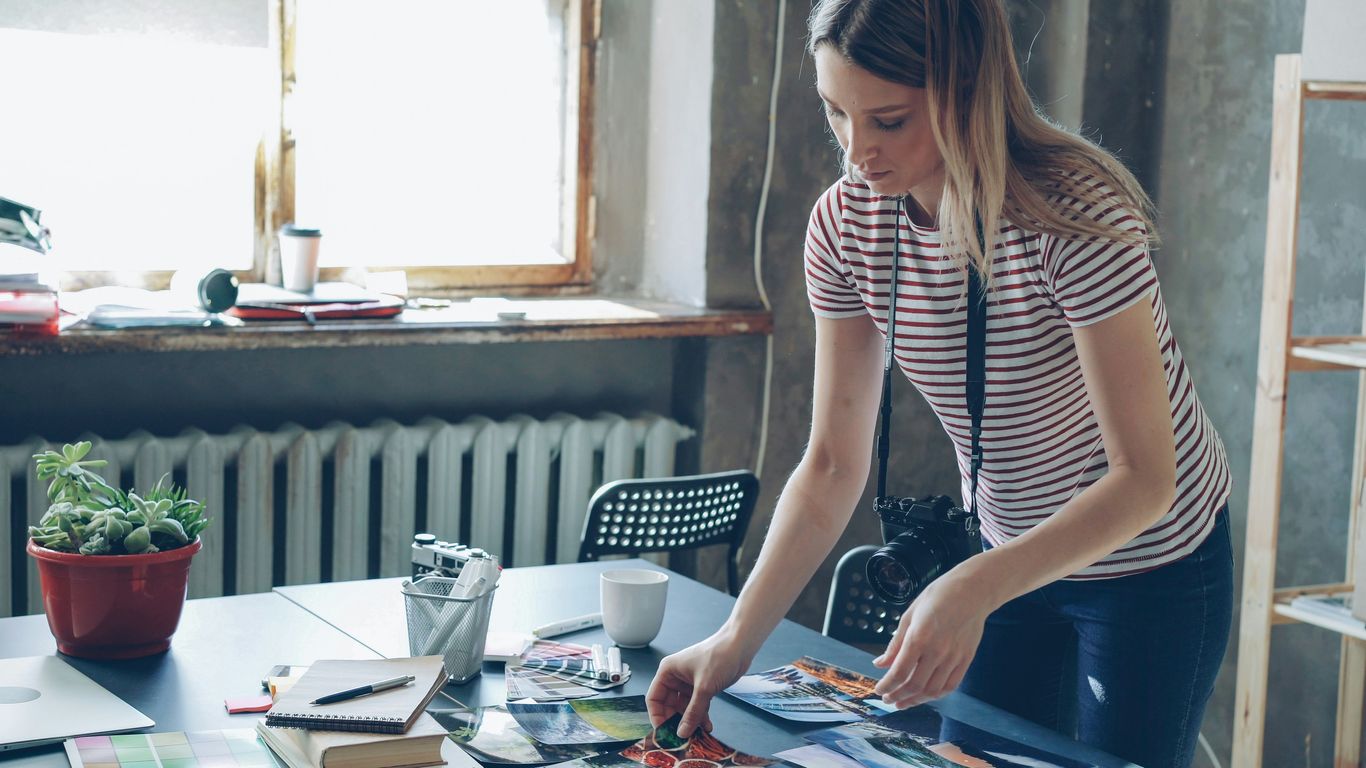
Brochure design is still a solid gig for us graphic designers. Even with everything going digital, companies still need physical handouts for events, sales pitches, or just to have on hand at their office. We’ve found that clients often come to us because they need something that looks professional and clearly explains their product or service. It’s not just about making pretty pages; it’s about organizing information so it’s easy to digest.
A well-designed brochure can make a big difference in how a business is perceived. We often get requests for tri-fold or bi-fold designs, which are pretty standard. The key is to make sure the layout flows well and guides the reader through the content. We also have to remember to set up files correctly for print, using CMYK colors and making sure everything is high-resolution. It’s a bit of a different skill set than web design, but totally doable.
Here’s what we usually focus on when taking on a brochure project:
Sometimes, clients are really specific about what they want, and other times they give us more creative freedom. Either way, the goal is to create something that looks polished and professional. We’ve had clients ask for the original, editable design file too, so we always make sure to clarify that upfront. It’s a good way to make sure the client has options down the line, and it’s a standard part of offering a complete brochure design service.
We’ve noticed that businesses looking for brochures often need them for specific events or marketing campaigns. This means turnaround time can sometimes be a factor, so being organized and efficient is pretty important. It’s not just about the final look, but also about getting it done on schedule for their needs.
Okay, so we’re talking about packaging design next. This is where a product really gets its first handshake with the customer, you know? It’s not just about putting stuff in a box; it’s about making that box, bag, or wrapper something people want to pick up. A great package can make a product fly off the shelves. We’ve seen clients come to us looking for really specific things, like a fun and visually appealing "Blind Package" that feels similar to what you’d find with collectible toys. It’s all about that initial wow factor.
Think about it: when you’re browsing online or in a store, what catches your eye? Often, it’s the packaging. It tells a story before anyone even opens the product. We’ve worked on projects where the packaging was so cool, people kept the box just as much as the item inside. It’s a big part of the whole brand experience.
Here’s a quick rundown of what goes into making good packaging:
We’ve found that clients often underestimate how much impact packaging has. It’s not just a container; it’s a marketing tool. A well-designed package can really influence how customers perceive the product and the brand itself. It’s a pretty big deal when you think about it. We’ve seen some amazing examples of creative packaging that really pushed the boundaries, like those collectible toy packages that people love to display. It really shows how design can add so much more value than just holding the product. Making a strong first impression is key.
Sometimes, the simplest designs are the most effective. It’s about finding that balance between being eye-catching and clearly communicating what the product is. We’ve learned that over-complicating things usually backfires. The goal is to make it look good and be practical.
For those looking to create something unique, we’ve even had requests for custom packaging that mimics the feel of popular collectible toy boxes, aiming for that same sense of excitement and collectibility. It’s a fun challenge to get that right. Creating a "Blind Package" requires a special touch.
Illustration is a big one for us freelancers these days. It’s not just about drawing pretty pictures anymore; it’s about creating visuals that tell a story or explain something complex. We’ve seen a real surge in demand for custom illustrations for everything from blog posts to marketing campaigns. Businesses want something unique, something that stands out from the usual stock photos.
We can really make a name for ourselves by offering specialized illustration services. Think about it: a client needs graphics for their new app, and instead of generic icons, they get a set of custom illustrations that perfectly match their brand’s personality. That’s a huge win for them, and a great project for us.
Here are some areas where illustration is really booming:
We’ve noticed that clients are often looking for illustrators who can adapt their style to fit different projects. So, being versatile is a good thing. It’s also helpful to have a strong portfolio that showcases a range of your work, maybe even some examples of how you’ve helped a brand with their visual identity through illustration. We’ve seen some interesting opportunities for illustrators working on brand campaigns and digital assets, which is pretty cool.
Clients are increasingly looking for artists who can bring a unique visual voice to their projects. This means developing a distinct style and being able to apply it consistently across various media. It’s about more than just technical skill; it’s about creative problem-solving through art.
If you’re good at bringing ideas to life visually, this is a field with a lot of potential. We’ve even seen some remote illustrator positions pop up, which is always a bonus for us freelancers. It’s a chance to work on diverse projects, from medical illustrations to animated graphics, sometimes with decent pay ranges too.
We’ve seen a big jump in requests for UI/UX mockups lately. It’s not just about making things look pretty anymore; it’s about how a digital product actually works and feels for the person using it. Clients want to see a clear vision of their app or website before any code is written, and that’s where we come in.
Creating these mockups involves a few key steps. First, we really dig into what the client needs and who their users are. Then, we start sketching out the basic layout and flow. This is where we translate ideas into visual blueprints. After that, we build out the detailed screens, focusing on every button, every menu, and how they all connect. It’s a lot of back-and-forth to get it just right.
Here’s a general idea of what goes into a typical mockup project:
We often get asked about the difference between wireframes and mockups. Think of wireframes as the skeleton – they show the basic structure. Mockups are like the body, adding the visual details and style. It’s a pretty important distinction for clients to grasp.
Clients are increasingly looking for designers who can not only make interfaces look good but also think about the user’s journey. This means we need to be good problem-solvers, not just pixel-pushers. It’s about making digital experiences intuitive and enjoyable.
This kind of work can be really rewarding. Seeing a client get excited about a design we’ve helped shape, knowing it’s going to be the foundation for a new app or website, feels pretty good. If you’re looking to get into this area, there are plenty of remote opportunities available, even for those just starting out in UI/UX design.
We’ve found that using the right tools makes a huge difference. Software that allows for easy collaboration and iteration is key. It helps us present our work clearly and get feedback efficiently, which is vital for projects like website mockups.
Motion graphics are really taking off, and honestly, it’s not hard to see why. We’re talking about bringing static designs to life, making them move and tell a story. It’s more than just animation; it’s about adding visual flair and dynamism to everything from explainer videos to social media ads. If you’ve got a knack for timing and a good eye for visual flow, this could be a great path for you.
The demand for skilled motion graphics artists is growing fast. Think about how many videos you see online every day – many of them have some form of motion graphics. Companies are realizing that moving visuals grab attention way better than plain images. This means more work for us!
Here’s what you might be doing:
It’s a field where you can really play with color, shape, and movement. We’ve seen some roles that pay really well, with salaries going up to $400K in some cases, especially for experienced designers who can handle complex projects high salaries ranging from $250K to $400K.
We’ve noticed that clients often come to us looking for motion graphics because they want to make their content more engaging. It’s not just about looking pretty; it’s about communicating information effectively and keeping viewers hooked. The ability to translate a brand’s message into a moving visual is a big deal.
When we look at the numbers, the average hourly pay for motion graphics jobs is pretty decent. For instance, in places like Dallas, NC, it’s around $32.12 per hour average hourly pay for motion graphics jobs. That’s a solid rate, and it can go up a lot depending on your skills and the complexity of the project. It’s a dynamic area that keeps evolving, so staying updated with new software and techniques is key.
So, that’s a look at some of the graphic design jobs we think will be big in 2026. It’s a field that keeps changing, which is pretty cool if you ask us. We’ve seen how important things like branding and digital stuff have become, and it’s only going to grow. If you’re a designer, or thinking about becoming one, keeping these trends in mind can really help you find your next gig. We’re excited to see what you all create. Keep designing, keep learning, and we’ll catch you in the next one.
We’re seeing a huge demand for logo design and full branding packages. Businesses want a strong visual identity, and that’s where we shine. Social media graphics are also super popular because everyone needs to look good online.
Absolutely! Creating eye-catching website banners and even full UI/UX mockups is a big part of what we do. Helping clients make their websites look professional and easy to use is key.
Start by building a strong portfolio that shows off your best work. Then, network with potential clients and use online platforms to find jobs. Don’t be afraid to start small and build up your experience.
We’ve found that infographic creation and brochure layouts are still sought after, especially by companies that need to explain complex information or create print materials. Packaging design is also a fun and growing area for us.
Yes, these areas often require specialized skills. For motion graphics, you’ll need to learn animation software. For illustration, developing a unique art style is important. But if you’re willing to learn, these can be very rewarding freelance paths.
That’s a tricky one! It depends on your experience, the project’s complexity, and the client’s budget. We usually figure out an hourly rate or a project-based fee after discussing the scope of work.